Prediabetes shows up as a single number on a lab report, and most people never get more than a hallway conversation about it before they're sent home to "watch their diet." If your fasting glucose landed between 100 and 125 mg/dL, or your A1C came back between 5.7% and 6.4%, you're likely shopping for a berberine supplement for prediabetes support that can reinforce the lifestyle changes you're already making. This guide covers what actually separates a useful berberine formula from a diluted one in 2026.
- A daily dose of 900-1,500 mg berberine HCl, split into 2-3 servings, matches what clinical trials use — the bar for a real berberine supplement for prediabetes.
- Vitalsupplements' berberine supplement delivers 1,200 mg berberine HCl daily with no filler blend — Buy.
- Proprietary 'metabolic complex' formulas that hide the berberine milligram count are a Consider at best.
- Extended-release and once-daily berberine formats lack data supporting their absorption claims — Skip.
- Most users report noticeable blood sugar changes around 3 to 4 weeks of consistent use.
Why this matters
Prediabetes is common and quiet — a lot of people find out from a routine blood panel and nothing else. Berberine is a plant alkaloid pulled from barberry and goldenseal that activates AMPK, the same metabolic switch metformin nudges, and a number of small trials link it to lower fasting glucose and better insulin sensitivity. That's the reason it's become the go-to "natural metformin" search for anyone trying to act before prediabetes turns into a type 2 diagnosis.
Vitalsupplements' berberine supplement packages 1,200 mg of berberine HCl per day specifically for that window — high enough to sit inside the dose range research actually used, sold without a prescription. That distinction matters more than most labels let on, because a lot of shelf-stable berberine products undershoot that range by half or more.
Who a berberine supplement for prediabetes is for
This guide is for adults with a fasting glucose reading between 100 and 125 mg/dL, or an A1C between 5.7% and 6.4%, who want to intervene before the number climbs further. It's for people already cutting refined carbs and walking after meals who want a supplement that reinforces that work rather than replaces it.
It is not for anyone already diagnosed with type 2 diabetes and on prescription medication. That's a conversation for a doctor, especially if metformin is already part of the routine, since both compounds work through overlapping metabolic pathways.
What to look for in a berberine supplement for prediabetes
Berberine HCl dose, not just "berberine"
Most of the research behind berberine's glucose effects uses total daily doses between 900 mg and 1,500 mg, typically split into two or three servings of around 500 mg each. Anything meaningfully under that range is unlikely to move fasting glucose the way the studies did. Check the supplement facts panel for a specific milligram number next to "berberine HCl," not a vague "proprietary extract" line.
Split dosing, because the half-life is short
Berberine clears the bloodstream within a few hours, which is exactly why trials dosed it two or three times a day instead of once. A single 1,000 mg capsule taken in the morning looks convenient on the label, but it skips the dosing pattern that produced the original results.
No proprietary blend hiding the dose
If a label reads "Metabolic Complex 850 mg" instead of "Berberine HCl 500 mg," there's no way to confirm the actual berberine content. Chromium and cinnamon aren't harmful additions, but they shouldn't be used to obscure the milligram count of the ingredient you're actually buying for.
Vegan capsule, minimal filler
Some capsules pad servings with magnesium stearate or bulking agents that quietly cut the labeled dose. A short, legible ingredient list makes it easier to trust that the stated 500 mg or 1,200 mg is what's actually in the capsule.
A return window long enough to judge results
Berberine's glucose effects build over weeks, not days — most people tracking changes report noticing something around the 3 to 4 week mark. A 30-day guarantee can cut you off before you've had a fair test; a 90-day window gives you room to actually judge whether it's working.
Price per gram of berberine, not per bottle
A cheaper bottle delivering only 500 mg a day can end up costing more per effective dose than a pricier bottle hitting 1,200 mg, once you account for buying two bottles a month to reach a usable dose. Compare cost against total monthly berberine delivered, not the sticker price, especially with prices shifting across brands heading into 2026.
The formulations worth your money
The straightforward pick — standalone 1,200 mg berberine HCl. One spec that matters: 1,200 mg of berberine HCl daily, sitting comfortably inside the 900-1,500 mg range used in research. Vitalsupplements ships this as a vegan capsule with no chromium or cinnamon filler, and backs it with a 90-day return window instead of the industry-standard 30. If you want the dose researchers actually studied without paying for ingredients you didn't ask for, this is the pick. Buy.
The proprietary blend — "metabolic complex" formulas. One spec that matters: labels here list a combined blend weight, say 800 mg, instead of a berberine-specific number, so you can't confirm the actual dose you're getting. Some brands split the blend evenly; others load it mostly with filler and cinnamon. Without a per-ingredient milligram breakdown, you're guessing. Consider only if the label discloses berberine milligrams separately — otherwise pass.
The extended-release capsule. One spec that matters: extended-release marketing promises one dose lasts all day, but berberine's core issue is poor bioavailability, not release speed — slowing the release further doesn't fix absorption. There's no published trial showing extended-release berberine matches results from split 500 mg dosing. Skip.
The bargain 500 mg single-dose bottle. One spec that matters: 500 mg once daily sits at roughly a third of the 1,500 mg ceiling used in research, so most buyers end up purchasing two bottles a month to reach an effective dose — erasing the discount entirely. Skip, unless you're stacking it with another dosed source to reach 900 mg or more daily.
The liquid tincture. One spec that matters: dropper-based dosing makes it nearly impossible to hit a consistent daily milligram target, and berberine's bitterness makes sticking with a daily habit harder over months. Skip for anyone tracking a specific dose.
What to avoid
- "Berberine extract" with no HCl designation or milligram count. If the label skips both, you can't compare it to anything used in the research behind the ingredient's reputation.
- Stimulant stacks marketed for weight loss. Berberine sold alongside caffeine or synephrine is built for a different goal, and the added stimulants can raise heart rate in people already managing blood sugar concerns.
- Once-daily claims with no split-dose data behind them. Convenience marketing doesn't override the short half-life problem — ask what the per-serving milligram count actually is before assuming a single capsule covers the day.
Verdict comparison
| Format | Daily berberine dose | Dosing frequency | Verdict |
|---|---|---|---|
| Standalone berberine HCl (1,200 mg) | 1,200 mg | 2-3x daily | Buy |
| Proprietary "metabolic complex" | Undisclosed | Varies | Consider |
| Extended-release capsule | Varies | 1x daily | Skip |
| Bargain 500 mg single dose | 500 mg | 1x daily | Skip |
| Liquid tincture | Inconsistent | Varies | Skip |
FAQ
What's the best berberine supplement for prediabetes?
The best berberine supplement for prediabetes delivers 900-1,500 mg of berberine HCl daily, split into two or three doses, matching the range used in clinical research. Vitalsupplements' 1,200 mg formula sits inside that range without a proprietary blend diluting the dose.
How much berberine should I take for prediabetes?
Most research uses 900-1,500 mg of berberine daily, typically split into two or three servings of around 500 mg each. Taking the full amount in one dose skips the pattern that produced those results, since berberine clears the body within hours.
How long does berberine take to affect blood sugar?
Most people tracking changes report noticing a difference around 3 to 4 weeks of consistent daily use. That's why a 90-day return window gives a fairer test than a 30-day one.
Is berberine as effective as metformin?
Some studies have found berberine produces glucose improvements comparable to certain prescription options over similar timeframes, but the two work through overlapping pathways. Anyone on metformin should talk to a doctor before adding berberine rather than assuming they stack safely.
Can I take berberine with metformin?
Berberine and metformin activate similar metabolic pathways, so combining them without medical guidance isn't recommended. A doctor can weigh in on dosing if you're managing prediabetes alongside a prescription.
What are the side effects of berberine?
Gastrointestinal symptoms like cramping and diarrhea are the most commonly reported side effects, especially in the first week of use. Starting with a lower dose and building up over a few days tends to reduce this.
Does berberine help with cholesterol too?
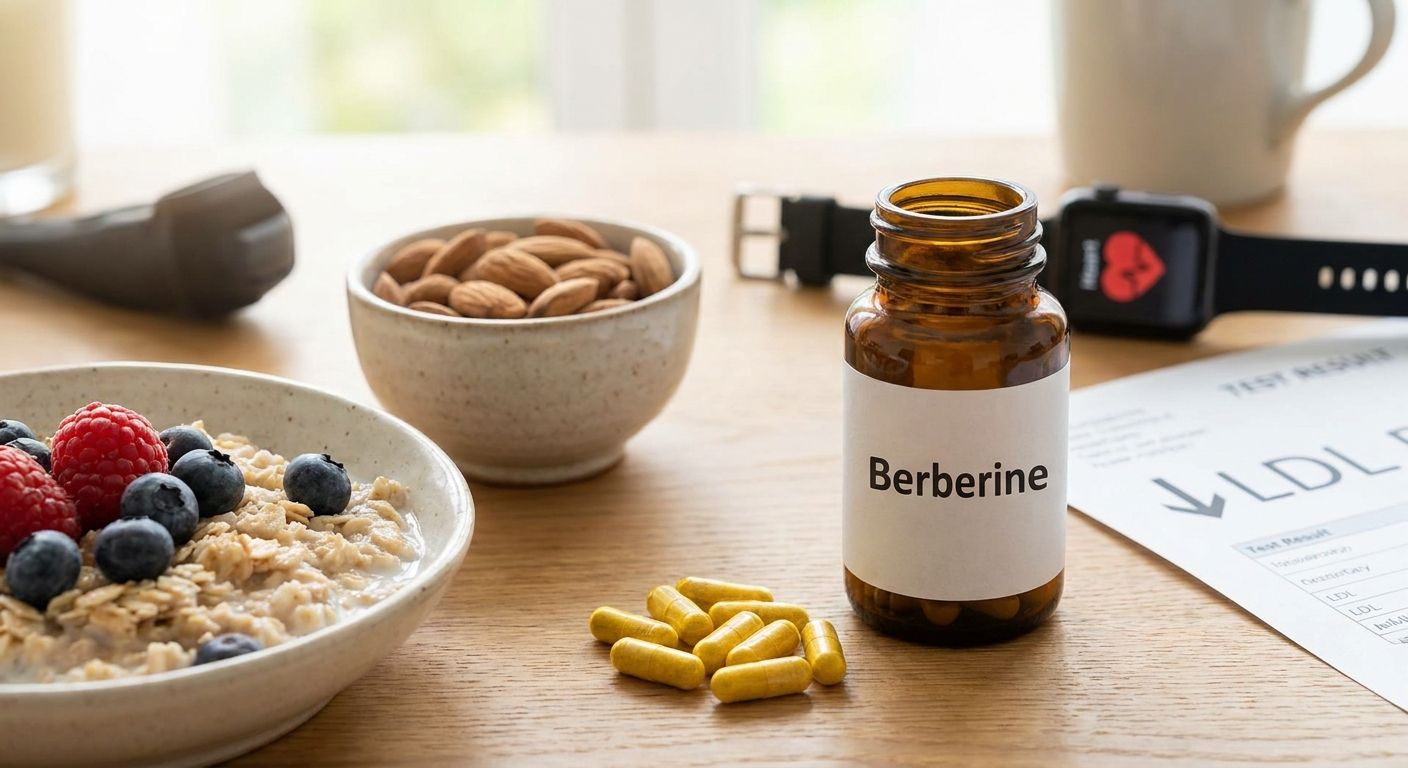
Several trials tracking berberine's glucose effects have also recorded LDL cholesterol reductions in the same participants. That overlap is why berberine shows up in cholesterol support formulas under a different label.
Is berberine safe to take daily in 2026?
Berberine is generally considered safe at 900-1,500 mg daily for short- to medium-term use, based on the available research through 2026. Long-term, multi-year safety data is still limited, so periodic check-ins with a doctor are worth doing.
One last thing
Berberine's glucose effect isn't the only thing showing up in the research — several of the same trials logged LDL cholesterol drops in participants tracking blood sugar. As of 2026, that overlap is still underused in how people shop: most buyers pick a berberine supplement purely for blood sugar and never notice the cholesterol data sitting in the same studies. A 1,200 mg standalone dose is doing double duty compared to a diluted blend that undershoots both.