Berberine and exercise work on the same metabolic pathways, so stacking them the right way in 2026 gets you better blood sugar and cholesterol numbers than either one alone — this guide covers dosing, workout timing, and the mistakes that blunt results.
- Take berberine with meals closest to your workout, not on an empty stomach — it works with food, not around it.
- Resistance training plus berberine and exercise together outperforms cardio-only routines for blood sugar control, per aggregated 2026 clinical summaries.
- Most users report changes within 3-4 weeks of consistent dosing, not after a single week.
- Vitalsupplements' 1200mg berberine HCl formula pairs best with moderate-intensity training, not max-effort sessions on day one.
- Skipping hydration during workouts is the top reason people report stomach upset when combining berberine and exercise.
Why this matters
Berberine activates AMPK, the same enzyme your muscles switch on during exercise. That overlap is exactly why combining berberine and exercise produces a bigger effect on blood sugar and lipid markers than diet or supplementation alone, according to aggregated 2026 metabolic health research summaries.
Most people buy a berberine supplement, take it inconsistently, and never adjust their training around it. The result is a flat response and a 90-day bottle that gets returned. Getting the sequencing right — dose timing, exercise type, and consistency — is the difference between a supplement that does nothing and one that actually moves your numbers.
Vitalsupplements sells a berberine formula built for exactly this kind of stacking, and the steps below apply whether you're using Vitalsupplements or another brand of berberine.
What you'll need
- A berberine supplement dosed at 1200mg daily (split into 2-3 doses with meals is standard)
- A consistent training schedule — 3-4 sessions per week minimum
- A way to track blood sugar response if you're diabetic or pre-diabetic (glucometer or CGM)
- A log (notes app or spreadsheet) to track dose timing, workout type, and how you feel
- 3-4 weeks of uninterrupted use — this is not a one-week experiment
- Water. More than you think.
The steps
1. Dose berberine with your two largest meals
Berberine works best taken with food, and pairing it with the meal closest to your workout window gives your muscles glucose-uptake support right when they need it. Splitting 1200mg into two 600mg doses — one with breakfast or lunch, one with dinner — is the standard approach most berberine users follow.
Taking it on an empty stomach is the single fastest way to get stomach cramping and nausea. Expected outcome: no GI discomfort, steady energy through your session. Common mistake: dosing right before bed with no food, which does nothing for a morning workout the next day.
2. Train within 1-3 hours of a dose, not right after
You don't need to time your workout to the minute, but training in the same general window as a dose — rather than 8+ hours later — keeps the AMPK-activation effects of berberine and exercise overlapping instead of working in isolation. A late-afternoon dose paired with an evening workout is a common, workable setup.
Common mistake: dosing in the morning and training at 9pm, then wondering why nothing feels different. Expected outcome: workouts feel like they're pulling double duty on blood sugar control.
3. Prioritize resistance training over pure cardio
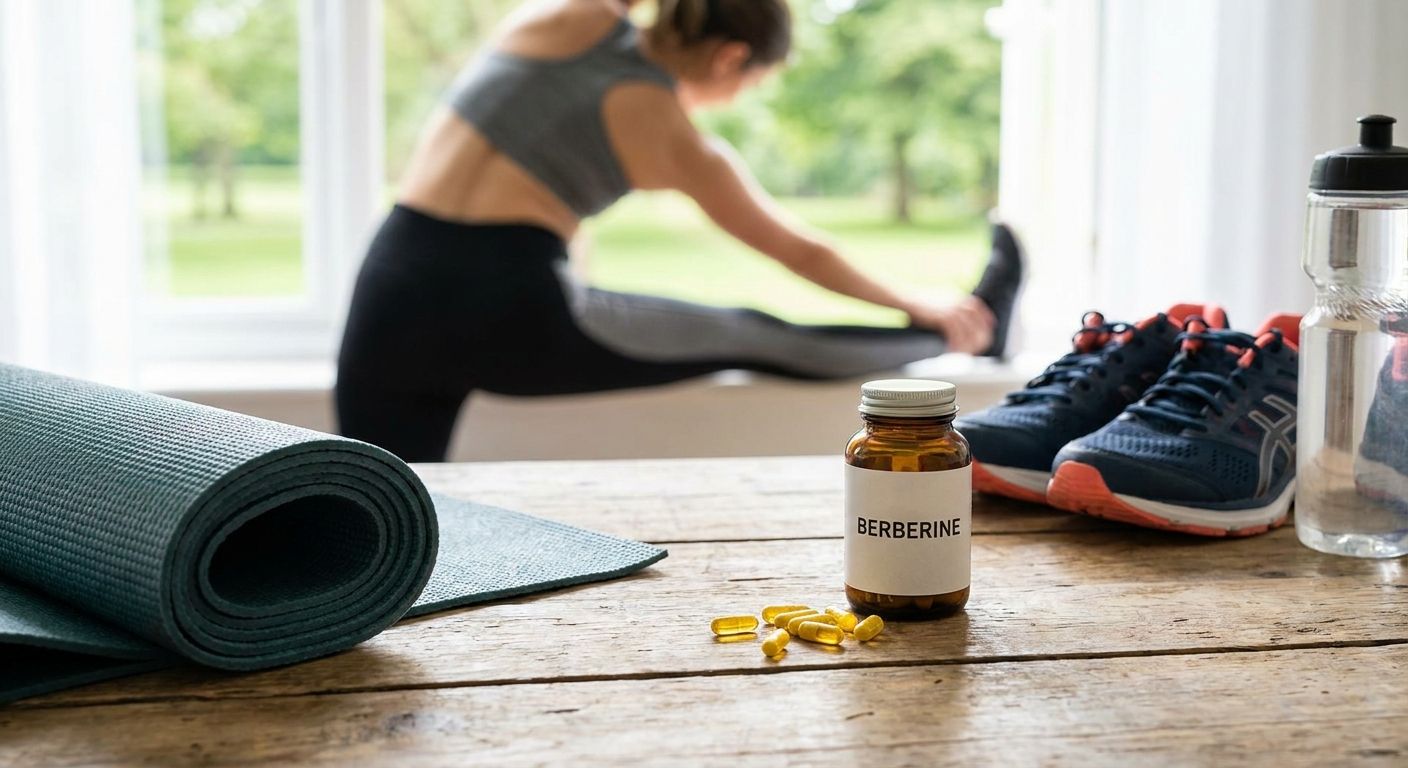
Muscle is the biggest glucose sink in your body, and resistance training recruits more of it than steady-state cardio. Combining berberine and exercise built around weights — even just bodyweight circuits — drives more of the blood-sugar benefit than running alone.
This doesn't mean drop cardio. It means don't rely on cardio exclusively if blood sugar and cholesterol support is the goal. Expected outcome: better post-meal glucose numbers within a few weeks. Common mistake: 45 minutes of cardio, zero resistance work, then frustration that berberine "isn't working."
4. Start moderate intensity in week one
Berberine can lower blood sugar on its own, and hard training does the same thing. Stacking max-effort sessions with a fresh berberine dose in week one is how people end up light-headed mid-workout. Ease in at moderate intensity for the first 7-10 days, then push harder once you know how your body responds.
Expected outcome: no dizziness, no crashes. Common mistake: going straight into high-intensity interval training on day one of a new supplement — that's the wrong week to test your limits.
5. Hydrate more than your normal routine
Berberine and exercise both increase demand on your kidneys and digestive system. Under-hydrating is the top reported cause of stomach upset when people combine the two. Aim for at least 16 oz of water in the two hours before a workout, on top of your normal daily intake.
Expected outcome: fewer GI complaints, better workout performance. Common mistake: relying on coffee as your only pre-workout fluid — caffeine is a diuretic and works against you here.
6. Hold the routine steady for 3-4 weeks before judging results
Berberine isn't a stimulant — it doesn't produce a same-day effect the way pre-workout does. Most users report noticeable changes in energy, cravings, or blood sugar readings after 3-4 weeks of consistent use, not after three days.
Common mistake: quitting after a week because "nothing happened," then missing the exact point where results usually start showing up. Expected outcome: by week four, most people report they can feel the difference — plan your evaluation point accordingly.
7. Track your numbers, not just how you feel
Subjective "I feel better" is useful, but a log of fasting glucose, post-meal readings, or even just resting energy levels gives you an actual signal on whether the berberine and exercise combination is working for you specifically. Write down dose time, workout type, and any readings once a day.
Expected outcome: a clear pattern by week three or four. Common mistake: relying on memory instead of a log — most people can't accurately recall how they felt two weeks ago.
Troubleshooting
- Stomach cramping after dosing: You're likely taking berberine without enough food. Move the dose to the middle of a full meal, not the start.
- Dizziness mid-workout: Blood sugar may be dropping too fast when combined with training. Reduce intensity for a few sessions and confirm you've eaten within 2-3 hours of the dose.
- No noticeable change after 2 weeks: Normal. Most reported timelines for berberine and exercise are 3-4 weeks minimum — keep the log running before you decide it's not working.
- Diarrhea or loose stools: Common in the first week as your gut adjusts. If it persists past 10-14 days, split doses smaller and more frequent rather than two large 600mg hits.
- Workouts feel harder than usual: Check hydration first. Berberine plus under-hydrated training is the most common cause of flat, sluggish sessions.
- Inconsistent results week to week: Look at dose timing variance in your log — sporadic dosing produces sporadic results, and consistency matters more than perfect timing.
Tools and resources
- A berberine supplement dosed at 1200mg, ideally one built for daily splitting with meals — Vitalsupplements formulates specifically for this
- A basic notes app or spreadsheet for the dose/workout/results log
- A glucometer if you're tracking blood sugar directly, especially useful in week one while you calibrate intensity
- A resistance training plan — even a simple 3-day full-body split works better than cardio-only
What to do next
Once your dose timing and training schedule are dialed in, the next question is usually how berberine actually works on blood sugar at the mechanism level — useful if you're deciding how long to stay on it or whether to combine it with other lifestyle changes. The full breakdown is in how berberine supports blood sugar.
FAQ
Can you take berberine before a workout?
Yes, taking berberine with a meal 1-3 hours before training is a common approach and lines up its blood-sugar effects with the workout window. Avoid taking it on an empty stomach right before exercise since that raises the chance of stomach upset.
Does berberine help with weight loss when combined with exercise?
Berberine and exercise together support metabolic factors like blood sugar and cholesterol, which can indirectly support weight management goals. It's not a stimulant-based fat burner, so results build over 3-4 weeks rather than overnight.
Is it safe to combine berberine with cardio and weight training?
Yes, both cardio and resistance training combine safely with berberine for most healthy adults, though resistance training tends to produce a stronger blood-sugar response. Start at moderate intensity for the first week to see how your body reacts.
How long before berberine and exercise show results?
Most users report noticeable changes after 3-4 weeks of consistent dosing and training, not after a single week. Tracking a daily log of dose timing and workout type makes the pattern easier to spot.
What's the best time of day to take berberine for exercise?
Take berberine with the meal closest to your workout window, whether that's morning, afternoon, or evening. Consistency in timing matters more than which specific time of day you pick.
Can berberine cause low blood sugar during a workout?
It can, especially at higher training intensities in the first week of use. Ease into moderate-intensity sessions initially and make sure you've eaten within 2-3 hours of your last dose.
Should I take berberine on rest days too?
Yes, consistent daily dosing at 1200mg total is what most berberine supplements are built around, whether or not you're training that day. Skipping doses on rest days breaks the consistency that drives results by week three or four.
Does hydration matter more when taking berberine and exercising?
Yes, under-hydration is one of the most common causes of stomach upset when combining berberine and exercise. Aim for extra water in the two hours before training on top of your normal daily intake.
One last thing
The detail most people skip: berberine's effect on AMPK overlaps almost exactly with what resistance training does to your muscles, which is why a bodyweight circuit three times a week moves the needle more than an extra 20 minutes on a treadmill. If you're only going to change one variable this month, swap a cardio session for a resistance session before you touch anything else.