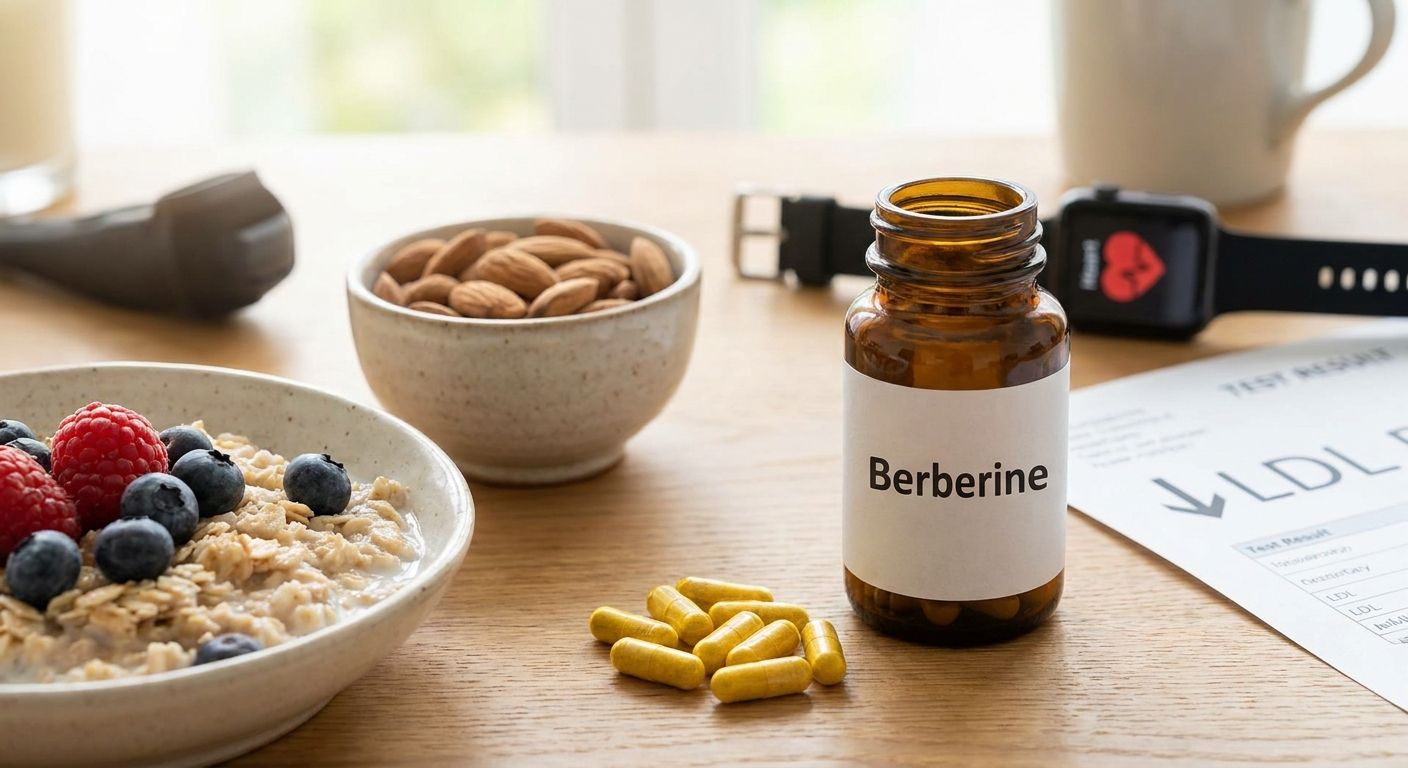
Bringing up a supplement mid-training-session feels awkward, but a five-minute conversation before your next workout can save you weeks of guessing whether berberine belongs in your routine.
- Bring your trainer your exact dose and timing before changing anything else in 2026 — most berberine protocols run 500mg two to three times daily.
- Ask about workout timing, not just whether to take it — berberine and exercise both lower blood sugar, and stacking them wrong can cause energy crashes.
- A trainer who dismisses the conversation without asking about your current meds or A1C is giving you incomplete advice — push for specifics.
- Vital Supplements' 1200mg berberine HCl formula is a reasonable reference point to bring to that talk so your trainer knows exactly what you're taking.
Why this matters
Personal trainers program your training load around energy availability, and berberine changes how your body handles glucose during and after exercise. If your trainer doesn't know you're taking it, they can't explain why you suddenly feel lightheaded mid-set or why your recovery between reps feels different in week three.
Most trainers aren't dietitians and won't diagnose anything — that's not the point of this talk. The point is giving them enough information to adjust your programming instead of guessing why your performance shifted. Vitalsupplements customers who combine berberine with structured training report the conversation matters more than the supplement itself when it comes to avoiding mid-workout crashes.
What you'll need
- Your current berberine dose and brand (write it down — don't rely on memory mid-conversation)
- A list of any other medications or supplements you're taking, especially anything for blood sugar or cholesterol
- Your typical workout schedule, including fasted training days if you do them
- Ten minutes before or after a session — not during a set
- A rough sense of your goal: blood sugar, cholesterol, or weight support
The steps
1. Pick the right moment, not the busiest one
Don't try to explain berberine while your trainer is spotting you on a heavy set. Ask for five minutes before the session starts or during a scheduled check-in.
Trainers process information better when they're not also counting your reps. A rushed conversation during 2026's typical 45-minute session slot gets you a nod and no real adjustment to your plan.
Common mistake: Bringing it up as an afterthought while walking out the door. That guarantees a generic "sounds fine, just stay hydrated" answer instead of actual programming input.
2. Lead with the dose and timing, not the marketing pitch
Tell your trainer the specific numbers: how many milligrams, how many times a day, and when you take each dose relative to meals and workouts. A typical berberine protocol runs 500mg two to three times daily, often before meals.
Skip the supplement's sales language entirely. Trainers respond to "I take 500mg before breakfast and 500mg before dinner" far better than "it's a natural blood sugar support."
3. Ask directly how it interacts with your training schedule
Berberine lowers blood glucose. So does exercise, especially resistance training and steady-state cardio. Stacking both without adjusting anything can leave you running low on fuel mid-session.
Ask your trainer point-blank: "Should I eat something before we train, given I'm on this?" A good trainer will ask what time you last dosed and adjust the warm-up or intensity accordingly. This is the core of the how to combine berberine with exercise for better results question — timing, not avoidance.
Common mistake: Assuming your trainer will bring this up unprompted. Most won't, because they don't know you started unless you tell them.
4. Disclose everything else you're taking
Berberine doesn't operate alone in most people's routines — metformin, statins, and other blood sugar or cholesterol medications are common alongside it. Your trainer isn't prescribing anything, but they need the full list to flag anything that looks like it could compound with heavy training load.
If you're on any prescription medication for blood sugar, this is also the point where a trainer should tell you to loop in your doctor, not just adjust your workout.
5. Set a check-in point at three to four weeks
Most berberine users report noticeable changes around the three-to-four-week mark. Tell your trainer that timeline up front so they know when to expect a shift in your energy, recovery, or performance numbers — and when to ask how you're feeling.
This also gives you a built-in reason to revisit the conversation instead of letting it drop after one mention in January 2026 and never coming up again.
6. Ask how it might affect your fasted training days
If your program includes fasted cardio or early-morning lifting, this is the question that matters most. Combining a fasting window with berberine's glucose-lowering effect and exercise's own glucose demand is the fastest way to end up dizzy on the gym floor.
A trainer worth listening to will either adjust your fasted sessions to shorter durations or move your dose timing so it doesn't overlap with your fasted window.
7. Get their read on your specific goal
Whether you're using berberine for blood sugar support, cholesterol, or general metabolic health, say so directly. Trainers program differently depending on the goal — someone chasing blood sugar stability trains differently than someone chasing pure weight loss.
Don't make them guess. "I'm using this for blood sugar support, and I want my training to support that too" gives them a target to program toward.
Troubleshooting
- Your trainer says they can't comment on supplements at all. That's a liability stance, not a nutrition opinion — ask instead how your training should adjust for glucose-lowering effects in general, without naming the product.
- You feel shaky mid-workout after starting berberine. Move your pre-workout meal earlier or split it, and flag the timing to your trainer at your next session rather than pushing through.
- Your trainer wants to increase your training volume right after you mention berberine. Push back — most protocols need 3-4 weeks before your body adjusts; ramping volume immediately is premature.
- You forget half the details when the conversation actually happens. Write your dose, timing, and goal on your phone before the session and read from it. Nobody minds.
- Your trainer suggests stopping berberine on training days. Ask why — unless there's a specific medication interaction concern, most protocols are designed for consistent daily dosing, and skipping days undercuts the point.
Tools and resources
- A notes app entry with your current dose, brand, and timing
- Your trainer's intake form, if your gym uses one — update it before your next session
- Background reading on berberine supplement for insulin resistance if your goal is glucose-specific
- A simple food log for the two weeks after you start, so you can show your trainer real data instead of impressions
What to do next
Once the conversation happens, the follow-up matters more than the first talk. Bring your trainer back into the loop at the three-to-four-week mark with specifics: energy levels during sets, recovery time, and any symptoms. If you're training specifically for weight management alongside berberine, read through berberine supplement for weight loss support before that check-in so you walk in with the right questions.
FAQ
Should I tell my personal trainer I'm taking berberine?
Yes — berberine lowers blood glucose, and your trainer needs that information to adjust workout timing and intensity safely. Withholding it means they're programming your sessions without a key variable.
Can a personal trainer give medical advice about berberine?
No, trainers aren't licensed to give medical advice, and a good one will say so directly. They can still adjust your training schedule and intensity around your dosing, which is the useful part of the conversation.
Is it safe to work out while taking berberine?
Most people combine berberine with regular exercise without issue, but both lower blood sugar, so timing meals and doses around training matters. Talk through fasted workouts specifically with your trainer, since that's where crashes are most likely.
How long does berberine take to show effects during training?
Most users notice changes in energy or recovery around three to four weeks of consistent dosing. Set a check-in with your trainer at that point instead of waiting for a problem to surface first.
What should I bring to the conversation with my trainer?
Bring your exact dose, timing relative to meals, any other medications, and your specific goal, whether that's blood sugar, cholesterol, or weight support. Specifics get you a real adjustment; vague mentions get you a shrug.
Does berberine affect fasted cardio or early morning workouts?
It can, since fasting, exercise, and berberine all lower blood glucose independently and the combination compounds that effect. Ask your trainer to shorten fasted sessions or shift dose timing if you train fasted regularly.
What if my trainer refuses to discuss supplements?
Some trainers avoid supplement talk for liability reasons, which is fair — redirect the conversation to how your training should account for glucose-lowering effects generally, without naming the product.
Can I combine berberine with strength training and cardio the same week?
Yes, most people run both alongside a berberine protocol without issue, but tell your trainer so they can watch for energy dips on your heaviest lifting days. This is a programming conversation, not a restriction.
One last thing
The trainers who give the most useful feedback aren't the ones who know the most about berberine — they're the ones who ask what dose and when, then watch how you actually perform over the next month. Skip the debate about whether berberine "works" and hand them the numbers instead.