Berberine interacts with common supplements and medications in ways that can blunt results or cause stomach upset if you stack things carelessly. This guide walks through the exact sequencing, timing, and combinations that work in 2026 so you get metabolic support without the guesswork.
- Take berberine with other vitamins by splitting doses 4-6 hours apart to avoid absorption conflicts with iron, calcium, and magnesium.
- 1200mg of berberine daily, split into 3 doses of 400mg with meals, is the standard protocol for blood sugar and cholesterol support.
- Berberine plus metformin or other glucose-lowering drugs needs a doctor's sign-off before you combine them in 2026.
- Vitamin D, omega-3, and turmeric pair well with berberine; iron and calcium do not without spacing.
Why this matters
Berberine works by activating AMPK, the same enzyme pathway targeted by metformin, which is why stacking it with certain minerals or medications changes how much actually gets absorbed. Take it at the wrong time next to calcium or iron and you can cut absorption of one or both by a meaningful margin. Get the timing right and berberine for blood sugar support layers cleanly on top of a normal vitamin routine without extra pills or complicated schedules.
Most people asking how to combine berberine with other vitamins are already taking a multivitamin, fish oil, or a mineral supplement and don't want to overhaul their whole stack. The fix isn't dropping supplements — it's sequencing them correctly across the day.
What you'll need
- A berberine supplement dosed at 500mg or 1200mg per serving (check the label on whatever bottle you're using)
- A pill organizer or phone reminder app split into morning, midday, and evening slots
- A list of everything else you currently take: multivitamin, iron, calcium, magnesium, fish oil, turmeric, or prescription medication
- 3-4 weeks minimum before judging results — berberine isn't a same-day effect
- A conversation with your doctor if you're on metformin, insulin, or any glucose-lowering medication
The steps
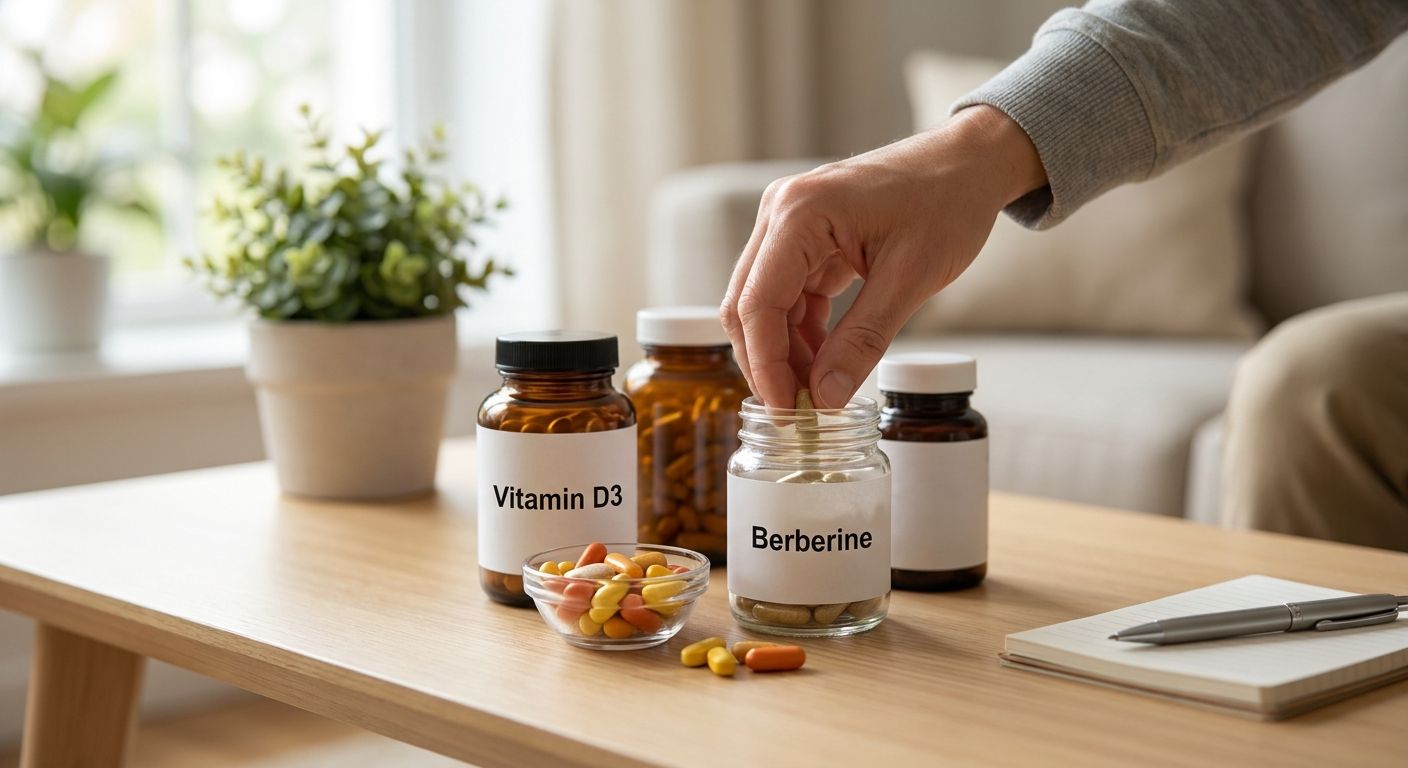
1. Audit your current stack before adding berberine
Write down every supplement and medication you take now, including the dose and time of day. This step matters because berberine's biggest conflicts are with iron, calcium, and certain antibiotics — not with vitamins C, D, or B-complex, which stack fine.
Most people skip this and just add berberine on top of whatever they're already doing, then can't figure out why they're bloated or why their iron levels look off three months later. Five minutes with a notepad prevents that.
Common mistake: assuming all supplements are neutral. Iron and calcium both compete with berberine for the same absorption pathway in the gut.
2. Split your berberine into 2-3 doses instead of one
A single 1200mg dose in the morning causes more GI upset than the same amount split across the day. Take 400mg with breakfast, 400mg with lunch, and 400mg with dinner — this mirrors how the compound is metabolized and reduces the nausea some first-time users report in week one.
Taking it with food, not on an empty stomach, cuts stomach discomfort significantly. Expect mild digestive adjustment for the first 5-7 days as normal.
Common mistake: taking the full daily dose at once to "get it over with." This is the fastest way to end up with cramping and skip the rest of the week.
3. Space iron and calcium at least 4 hours from berberine
If you take an iron supplement for anemia or a calcium supplement for bone health, don't take it in the same sitting as berberine. Both minerals bind to berberine in the gut and reduce how much of each gets absorbed.
A practical schedule: berberine with breakfast and lunch, iron or calcium with dinner or right before bed. This keeps a 4-6 hour buffer between them.
Common mistake: tossing every pill into one morning handful because it's convenient. Convenient and effective aren't the same thing here.
4. Pair berberine with vitamin D and omega-3 without changing timing
Vitamin D and fish oil don't compete with berberine for absorption, so you can take them together with any meal. Some users report better results stacking berberine with omega-3s specifically because both support cardiovascular markers through different mechanisms.
This is one of the few combinations where you don't need to think about sequencing at all — take them together and move on.
Common mistake: overcomplicating a pairing that doesn't need spacing, which leads to skipped doses because the schedule feels like too much work.
5. Add turmeric or curcumin only if you watch for extra GI sensitivity
Turmeric and berberine are both metabolized through similar liver pathways, and combining them is popular for inflammation and metabolic support together. If you're curious about a formulated option, a berberine supplement with turmeric built for this exact pairing removes the guesswork on ratios.
Start with a lower turmeric dose for the first week if you're new to the combination, since both compounds can independently cause loose stools at higher amounts.
Common mistake: starting both at full strength in week one instead of ramping up.
6. Confirm your medication list with a doctor before layering berberine
Berberine lowers blood sugar through the same AMPK pathway as metformin, and stacking the two without medical guidance risks blood sugar dropping lower than intended. This is the one step in this guide that isn't optional if you're on a glucose-lowering prescription.
Bring your full list — including the berberine supplement for insulin resistance or type 2 diabetes support product you're considering — to your next appointment rather than starting on your own.
Common mistake: assuming "natural" means no interaction risk. Berberine's mechanism is pharmacologically active, not passive.
7. Track results at the 3-4 week mark, not week one
Berberine's effects on fasting glucose and cholesterol markers build over 3-4 weeks of consistent use, not days. Judging the combination too early leads people to quit right before results show up.
Keep a simple log: morning weight, energy level, and any GI symptoms. By week four you'll have enough data to know if the stack is working or needs adjusting.
Common mistake: stopping after 10 days because "nothing happened yet."
Troubleshooting
- Stomach cramping or diarrhea in week one — split doses further (into 3-4 smaller amounts) and always take with food, not on an empty stomach.
- Iron levels dropping on bloodwork — you're likely taking iron too close to berberine; move iron to a separate part of the day with a 4-6 hour gap.
- No noticeable change after 3 weeks — confirm your dose totals 1200mg daily across all servings; underdosing is the most common reason for flat results.
- Lightheadedness if you're also on metformin — this signals blood sugar dropping too low combined; contact your doctor immediately and don't adjust doses yourself.
- Bloating that started after adding turmeric — reduce the turmeric dose first before dropping berberine, since turmeric is the more common trigger of the two.
- Forgetting the midday dose consistently — switch to a two-dose schedule (morning and evening) at 600mg each instead of three smaller doses if compliance is the real issue.
Tools and resources
- A pill organizer with AM/midday/PM compartments to keep the spacing consistent
- Vitalsupplements for berberine formulated at 1200mg per daily serving, vegan with no fillers
- The berberine supplement for prediabetes support page if you're stacking specifically around glucose management
- A basic food-and-symptom log (paper or app) for the first month
- Your doctor's contact info on hand if you're combining berberine with any prescription
“Take iron or calcium within the same hour as berberine and you weaken absorption of both.”
What to do next
Once your stack is dialed in, the next lever is pairing berberine with activity instead of just supplements. Read how to combine berberine with exercise for better results to see how workout timing affects the same AMPK pathway berberine targets.
FAQ
Can I take berberine with a multivitamin?
Yes, a standard multivitamin is fine alongside berberine since most B vitamins, vitamin C, and vitamin D don't compete for the same absorption pathway. The exception is if your multivitamin contains iron or calcium, which should be spaced 4-6 hours from your berberine dose.
Is it safe to take berberine with metformin?
Not without a doctor's approval, because both lower blood sugar through the same AMPK pathway and combining them can push glucose lower than intended. Get bloodwork and a check-in before adding berberine to a metformin regimen.
What vitamins should not be taken with berberine?
Iron and calcium are the two most likely to reduce berberine's absorption if taken at the same time. Space either mineral at least 4 hours from your berberine dose to avoid the conflict.
How much berberine should I take per day in 2026?
1200mg daily, split into three doses of 400mg with meals, is the standard protocol used in most berberine products sold in 2026. Higher doses haven't shown added benefit and increase the risk of GI side effects.
Can berberine and turmeric be taken together?
Yes, berberine and turmeric are commonly stacked for combined metabolic and inflammation support, and a formulated berberine supplement with turmeric removes the need to calculate separate doses. Start with a lower turmeric amount for the first week since both compounds can cause loose stools at full strength.
Does berberine interact with omega-3 fish oil?
No, berberine and omega-3 don't compete for absorption and can be taken together with any meal. Some users pair them specifically because both support cardiovascular markers through separate mechanisms.
How long before berberine with other vitamins shows results?
Most people need 3-4 weeks of consistent daily use before fasting glucose or cholesterol markers show meaningful change. Judging the stack before the three-week mark is the most common reason people quit too early.
Should I take berberine on an empty stomach?
No, take berberine with food to reduce the stomach cramping and nausea some first-time users report in week one. An empty stomach makes GI side effects noticeably worse.
One last thing
The single biggest mistake people make combining berberine with other vitamins isn't a dangerous interaction — it's inconsistency. Splitting a 1200mg daily dose into three servings only works if you actually take all three, and pill organizers cut missed-dose rates far more than willpower does. Set the schedule once in 2026 and let the organizer do the remembering.